
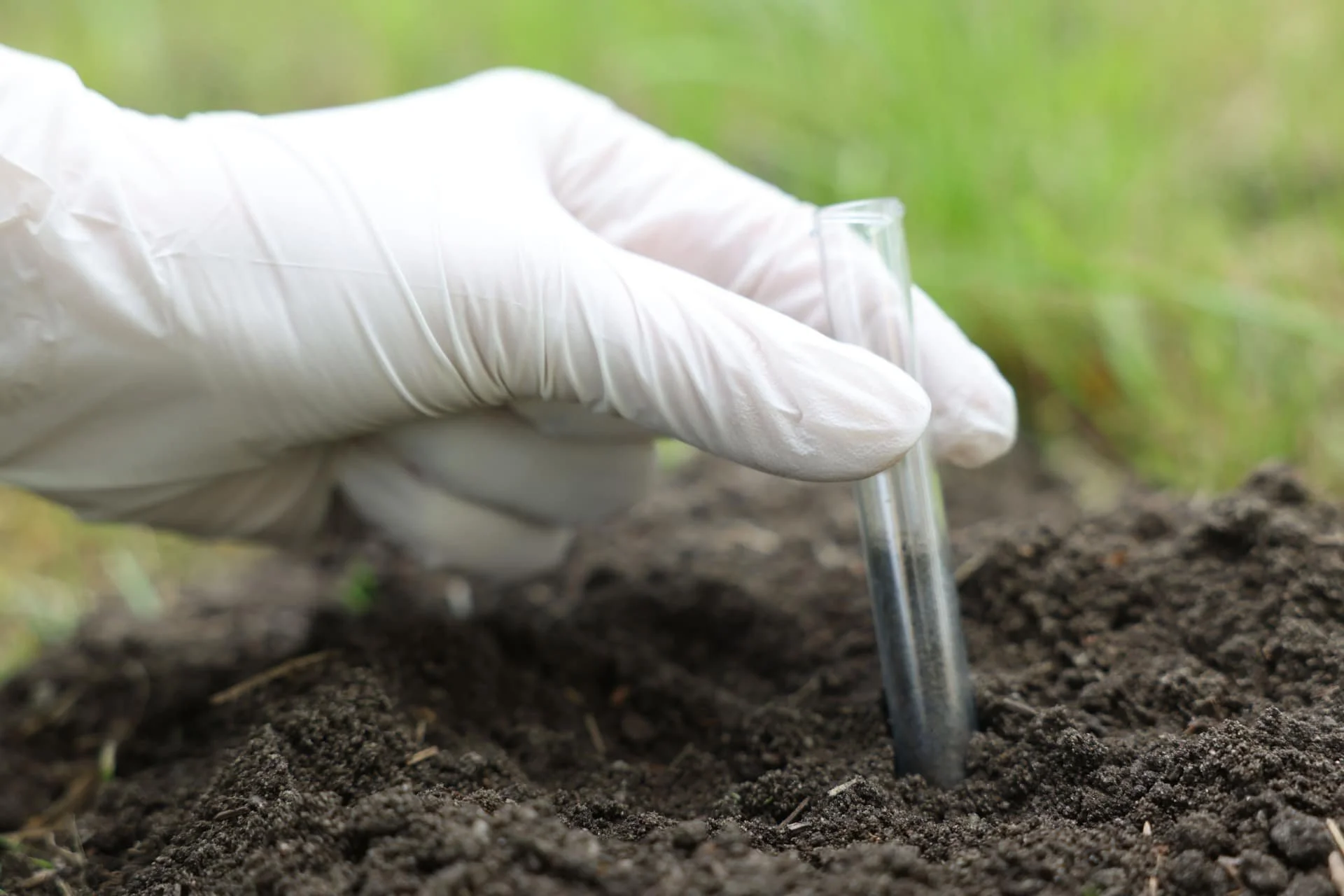
If you’re planning to test your lawn’s soil, fall is the time to do it in Wilmington and the rest of coastal North Carolina. A test in October or November gets your results back well before spring green-up and gives any lime or sulfur the winter to start working, so your lawn is ready to grow when the weather warms.
Sandy coastal soil makes that timing more important here than in most of the state. Here’s why fall testing pays off, what a soil test tells you, and what to do with the results.
Why Is Fall the Best Time to Test Soil in Coastal NC?
Soil corrections take time. Adjusting soil pH can take several months to show a change, so a fall test means the fix is already underway by the time your warm-season grass wakes up in spring.
Winter helps, too. Gentle winter rains and the freeze-thaw cycle help work lime into the soil, with less runoff than you’d get in summer.
There’s a practical side as well. Your warm-season lawn is heading into dormancy, so there’s nothing to fertilize until spring anyway. Testing now means that when green-up arrives, your fertilization plan is already built around what your soil needs, instead of waiting on results while the growing season gets underway.
Why Do Sandy Coastal Soils Need Regular Testing?
Sandy soil doesn’t hold onto nutrients the way heavier soil does. Soils naturally become more acidic over time as calcium and magnesium leach out, a process that’s especially pronounced in sandy coastal plain soils. Around Leland, Winnabow, and much of the Wilmington area, that means a lawn’s pH can drift year to year without any visible warning until the grass starts struggling.
Coastal soil doesn’t always lean acidic, though. Some properties have naturally high-pH soil from shell material, which acts as a lime source. Lots near the beaches, or ones built up with fill, can test well above where you’d expect. You can’t tell which way your soil leans just by looking, which is why testing matters.
What Does a Soil Test Tell You About Your Lawn?
A soil test measures your soil’s pH and its levels of key nutrients like phosphorus and potassium. Those results show whether your lawn needs lime to raise pH, sulfur to lower it, or specific nutrients, so fertilizer goes where it’s needed instead of being guessed at.
Each nutrient plays a different role. Phosphorus supports root development, which matters most for new lawns and areas that are filling in. Potassium helps turf hold up against heat, drought, cold, and disease, and coastal lawns see all four between humid summers and the occasional hard freeze.
Potassium is also the nutrient sandy soil has the hardest time keeping. It leaches out readily in soils with deep sandy surfaces, so a lawn can come up short even on a steady feeding schedule. Phosphorus tends to build up over time instead, which is why the test checks both rather than assuming.
The right pH depends on your grass. The target is 5.5 for centipede and 6.0 for other lawn grasses, with testing recommended every two to three years. That difference matters because centipede is common across coastal North Carolina, and liming it like a Bermuda or zoysia lawn can push the pH too high.
When that happens, centipede often shows it. It tends to turn yellow from iron deficiency when soil pH runs high, a problem that more fertilizer won’t fix.
What Are the Signs Your Lawn Needs a Soil Test?
Any lawn benefits from regular testing, but some situations make it more urgent:
Your lawn isn’t responding to fertilizer. If you’re feeding it on schedule and it still looks pale or thin, pH is often the reason nutrients aren’t getting through.
Your grass is yellowing for no obvious reason. Yellowing can point to a nutrient deficiency or a pH problem, especially in centipede.
You’ve moved into a new home. You don’t know what the previous owner applied, or whether the yard was built on imported fill.
The lawn is thin or patchy despite good care. Struggling turf on sandy soil often traces back to fertility problems that aren’t visible from the surface.
It’s been more than two or three years since your last test. Coastal soil changes, and an old test may not reflect where it stands now.
If any of these sound familiar, a fall test gives you answers before next growing season rather than after another year of guessing.
What Should You Do With Your Soil Test Results?
Start by reading what the report says. It shows your current pH, the target pH for your grass type, your nutrient levels, and specific recommendations for lime, sulfur, and fertilizer. The most important rule is to adjust only what the test says needs adjusting. Applying lime or sulfur without a reason can push pH the wrong way, and overliming in particular can take years to correct.
Timing comes next. Lime can go down any time of year, and fall or winter applications give it the longest head start before spring. Fertilizer is different. Warm-season lawns shouldn’t get nitrogen until at least three weeks after green-up begins, so your soil test results shape the fertilization plan that starts then.
The best results come from treating the test as a starting point rather than a one-time answer. A lawn care program built around your results matches fertilization to your grass type and what your soil is missing, then retests to track progress. Landscape beds benefit from the same approach. Trees and shrubs respond to soil pH too, which is why our ornamental tree and shrub programs include soil building.
Let Turfology Find Out What Your Soil Needs
Turfology handles soil testing from start to finish, from collecting samples to building a treatment plan around the results. We test for homeowners across New Hanover, Brunswick, and Pender counties, as well as for HOAs and business properties through our commercial turf management programs and for schools and parks through our sports turf services.
Call (910) 617-4237 or contact us, and we’ll find out exactly what your soil is missing before spring arrives.
Frequently Asked Questions
When is the best time to test lawn soil in Wilmington, NC?
Fall is the best time, ideally October or November. Testing then gets results back well before spring and gives lime or sulfur the winter to start working.
Can I test my lawn’s soil in the spring instead?
You can, and a spring test is better than none. But pH corrections can take several months to show results, so a spring test often means your lawn spends much of the growing season waiting for the fix to take hold.
How often should I test my lawn’s soil?
Established lawns should be tested every two to three years. Lawns that aren’t responding to fertilization, or that are actively being corrected, benefit from testing more often.
What pH should my lawn’s soil be?
It depends on your grass type. The target is 5.5 for centipede and 6.0 for other lawn grasses, including Bermuda, zoysia, and St. Augustine.
Is coastal North Carolina soil acidic or alkaline?
Most sandy coastal soils lean acidic and become more so over time as nutrients leach out. Some properties, especially near the beaches or on fill, contain shell material that pushes pH higher, so a soil test is the only reliable way to know.